
An illustrated Bible study
Why Was Jesus Baptized
If He Had No Sin?
In this study
John called people to repent, and those coming to him confessed their sins. Then Jesus came to the Jordan to be baptized. If Jesus had no sin to confess and no wrongdoing to turn away from, why would He enter the water?
John himself recognized that this was no ordinary request. The conversation that follows helps us understand Jesus’ obedience, His identity, and an important distinction between His baptism and ours.
Why John Hesitated
Read Matthew 3:1–6, 11–14; Mark 1:4–5.
John’s work prepared people for the coming Lord. He preached repentance, warned against empty religious confidence, and directed attention to One greater than himself. Mark describes his baptism as a baptism of repentance for the remission of sins.
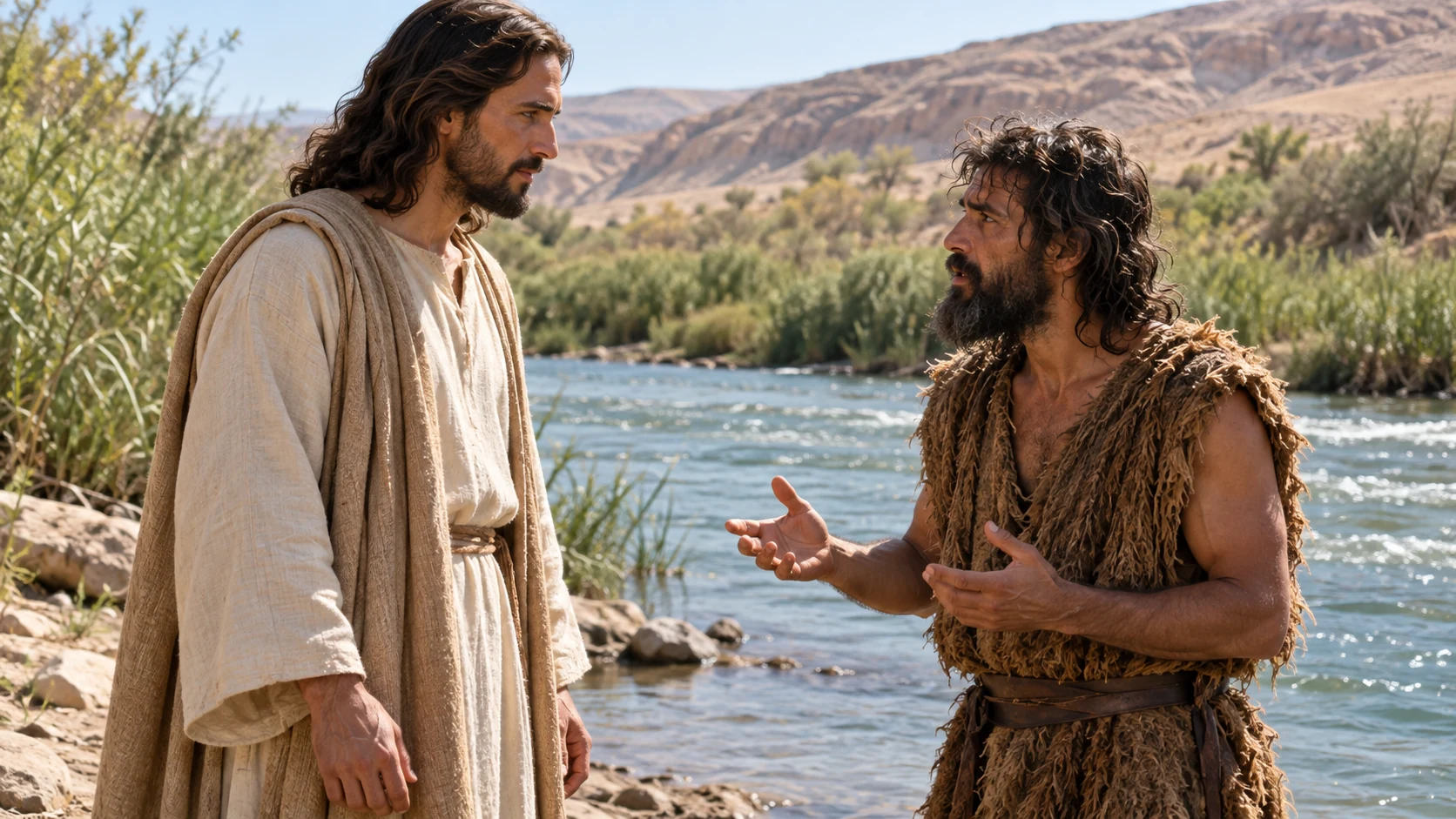
When Jesus comes to be baptized, John tries to prevent Him. He says that he needs to be baptized by Jesus and asks why Jesus is coming to him instead. John recognizes that the greater One is making a request of the lesser.
We should let that hesitation sharpen our question. Jesus’ baptism cannot be explained by assuming He needed the same cleansing from personal sin as the people around Him. Matthew records a different reason in Jesus’ own answer.
Jesus Had No Sin to Wash Away
Read Hebrews 4:15; 1 Peter 2:21–24.
Hebrews describes Jesus as having been tempted as we are, yet without sin. Peter likewise says that He committed no sin and that no deceit was found in His mouth. His sinlessness is essential to understanding what He came to do for us.
Jesus did not become morally clean at the Jordan. He did not confess an earlier sinful life or receive forgiveness for wrongdoing of His own. He came as the sinless One who would bear our sins in His body on the cross.
That distinction keeps the focus on Him as Savior. We need rescue from sin; He is the One who provides it. His willingness to enter the water does not contradict His purity. It leads us to ask what the Father’s purpose was in this particular act.
“To Fulfill All Righteousness”
Read Matthew 3:15.
Matthew 3:15 (NKJV): “Permit it to be so now, for thus it is fitting for us to fulfill all righteousness.”
Jesus gives John a reason to proceed. In this setting, fulfilling all righteousness means carrying out what is right in God’s purpose. Jesus submits to the baptism connected with the ministry God had given John, even though Jesus has no personal sin of which to repent.
Notice that Jesus speaks of what is fitting for them to do. John must allow the baptism, and Jesus willingly receives it. John then consents. The answer directs us toward obedience to God rather than cleansing Jesus from a moral failure.
The passage does not identify a particular Old Testament command requiring every sinless person to be baptized. We should not invent one. Jesus’ own explanation is sufficient: this action is fitting in the fulfillment of God’s righteous purpose.
For us, the scene demonstrates a willingness to honor the Father’s will. Jesus does not treat obedience as beneath Him. Yet His purpose in receiving John’s baptism must still be understood in its own setting.
The Father Declares Who Jesus Is
Read Matthew 3:16–17; John 1:29–34.
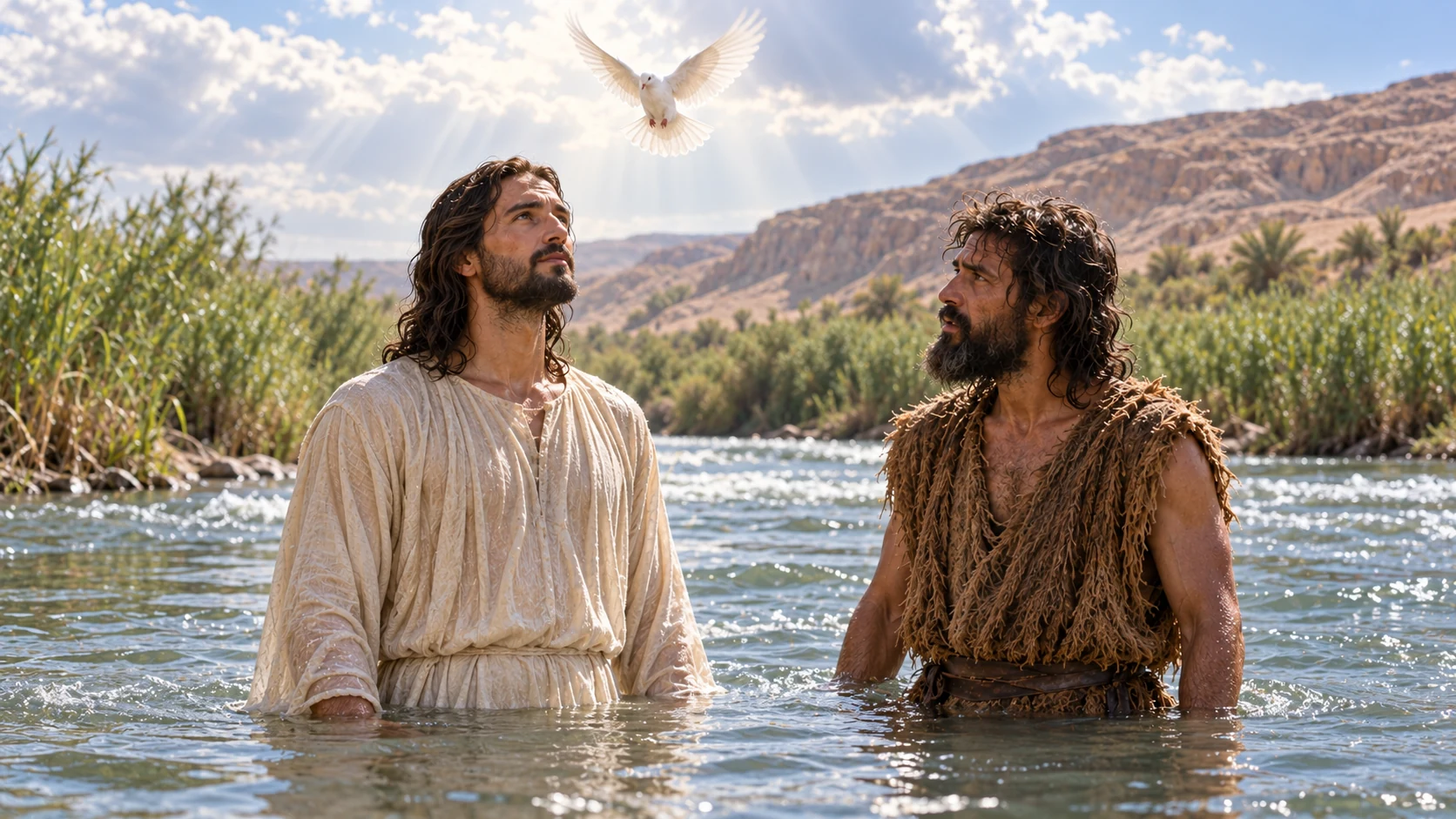
After Jesus is baptized, He comes up from the water. The heavens open, the Spirit of God descends like a dove, and a voice from heaven speaks.
Matthew 3:17 (NKJV): “This is My beloved Son, in whom I am well pleased.”
The Father’s words express approval and identify Jesus as His beloved Son. The Son is present in the water, the Spirit descends, and the Father speaks from heaven. These are not three names for a single person taking turns in the scene.
John’s Gospel adds that the Spirit’s descent and remaining on Jesus was the sign given to John for recognizing the One who baptizes with the Holy Spirit. John testifies that Jesus is the Son of God and identifies Him as the Lamb of God who takes away the sin of the world.
This is a revelation of Jesus’ identity, not the moment He first becomes God’s Son. Matthew has already introduced His miraculous conception in chapter 1. The baptism stands at the opening of His public ministry and directs attention to the One through whom God brings salvation.
How His Baptism Differs from Christian Baptism
Read Matthew 28:18–20; Acts 2:36–38; Romans 6:3–4; Colossians 2:12.
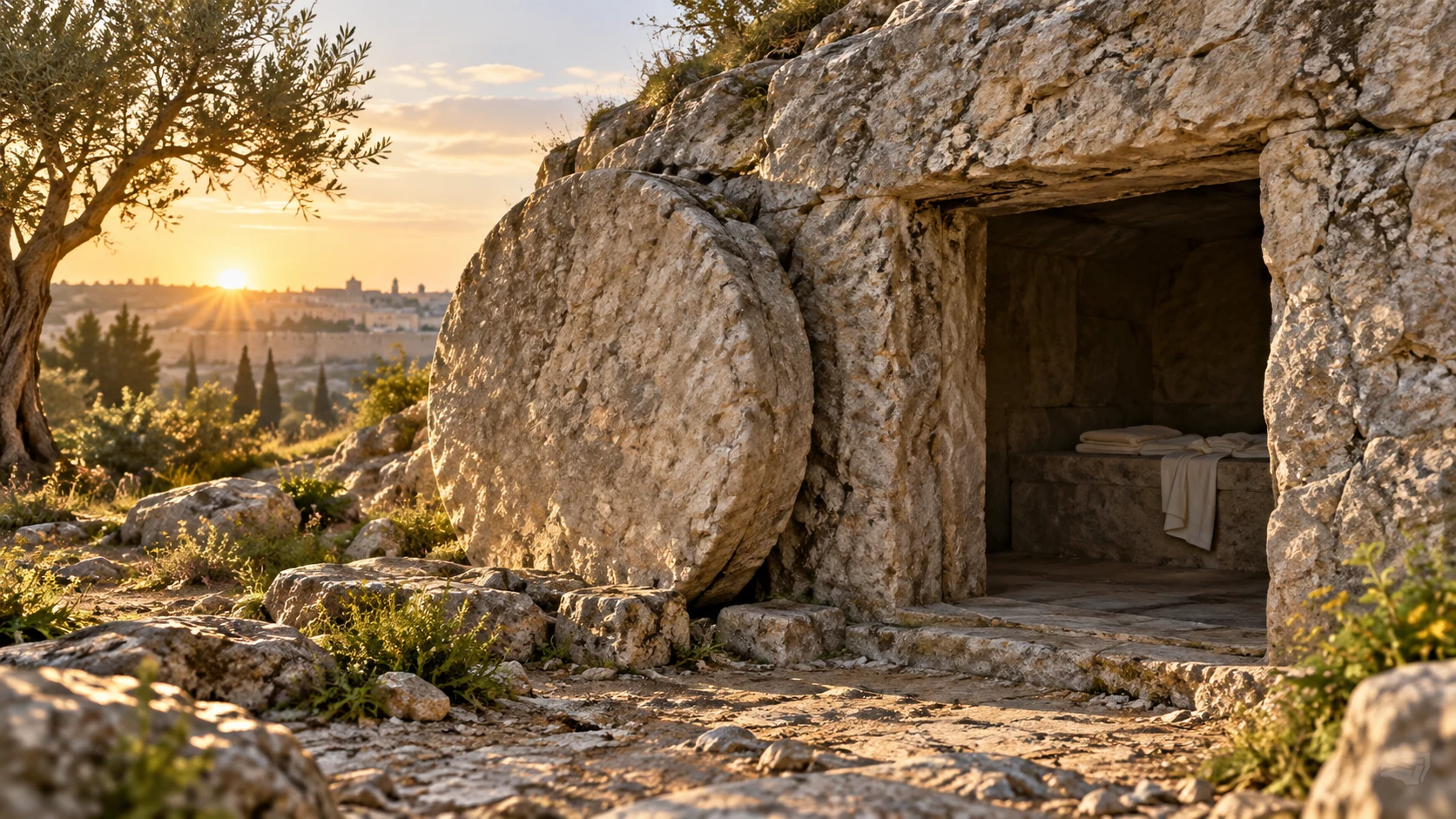
Jesus received John’s baptism before His death and resurrection. After rising from the dead, He commanded His followers to make disciples, baptizing them in the name of the Father, the Son, and the Holy Spirit and teaching them to observe His commands.
On Pentecost, Peter proclaimed the crucified and risen Jesus as Lord and Christ. He called his hearers to repent and be baptized in Jesus’ name for the remission of sins, with the promise of the gift of the Holy Spirit.
Paul explains that those baptized into Christ Jesus are baptized into His death, buried with Him through baptism, and raised to walk in newness of life. Colossians 2:12 connects being buried and raised with Him with faith in the working of God, who raised Jesus from the dead.
Christian baptism therefore involves more than copying an outward action Jesus once performed. It is a response of faith to the crucified and risen Savior, connected in Scripture with forgiveness and new life in Him. Jesus had no sin to be forgiven; we do. His death and resurrection supply what we cannot provide for ourselves.
Obedience does not mean earning salvation by our own goodness. The saving power belongs to God through Christ. We trust Him and receive His word rather than treating baptism as either a magical action apart from faith or an instruction we may dismiss.
What Should We Take from the Jordan?
Read Matthew 3:13–17; Hebrews 4:14–16.
Jesus was baptized to fulfill all righteousness, not to be cleansed from personal sin. At the Jordan, the Father declared His approval and the Spirit descended upon the Son. The scene points us to Jesus’ obedience and identity at the beginning of His ministry.
Our response begins by recognizing who He is. He is not another sinner looking for a fresh start. He is our sinless Savior and sympathetic High Priest, through whom we may approach God for mercy and help.
When studying our own response to the gospel, we should read the instructions given after His resurrection as well as the account of His baptism. The same Lord who willingly fulfilled the Father’s purpose calls us to trust Him, repent, and follow what He has taught.
Questions for Reflection
- How does John’s hesitation help explain why Jesus’ baptism is unusual?
- Why must Jesus’ sinlessness shape the way we understand His baptism?
- What does Jesus’ answer in Matthew 3:15 tell us, and what should we avoid adding to it?
- What do the Father’s words and the Spirit’s descent reveal about Jesus?
- How do Acts 2:38, Romans 6:3–4, and Colossians 2:12 explain Christian baptism more fully than simply saying we are copying Jesus?
Images are AI-generated historical illustrations, not photographs of the events or verified portraits.
← All written Bible lessons