
An illustrated Bible study
Can I Come Back to God?
The Father and His Two Sons
In this study
Sometimes the hardest step after doing wrong is believing that returning is still possible.
Shame can make us hide. Pride can make us defend ourselves. Fear can convince us that God no longer wants us.
In Luke 15, Jesus tells a parable about a son who leaves home, wastes what his father gives him, and eventually returns. But the story also includes another son whose resentment reveals a different problem.
Both sons help us examine our relationship with God.
Why Jesus Told This Story
Read Luke 15:1–3.
Tax collectors and sinners were approaching Jesus to hear Him. The Pharisees and scribes complained that He received sinners and ate with them.
Jesus answered with three parables: a lost sheep, a lost coin, and a father with two sons.
That setting matters. Jesus was addressing both people who needed to return to God and people who resented the welcome given to sinners.
As we read, we should ask two questions: Am I willing to return? Am I willing to rejoice when someone else returns?

Wanting the Gifts Without the Father
Read Luke 15:11–16.
The younger son asks for his portion of the inheritance. After receiving it, he leaves for a distant country and wastes his possessions.
Then a severe famine comes. His money is gone, and he finds himself feeding pigs, hungry and without anyone giving him what he needs.
His decision had consequences that he could not simply wish away.
We can make a similar mistake when we enjoy God’s gifts while resisting His direction. We want life on our terms and assume that independence from God will bring satisfaction.
The son’s circumstances expose how badly that assumption has failed.
Repentance Means Turning Around
Read Luke 15:17–20.
The son recognizes his condition and remembers that even his father’s hired servants have food.
He decides to return and confess that he has sinned against heaven and against his father. He no longer approaches home demanding what he believes he deserves.
But his response does not end with a thought or a feeling. He gets up and goes.
That distinction matters. Regretting consequences is not the same as turning away from sin. Repentance involves an honest change of heart that leads us to change direction.
We cannot remain committed to the distant country while claiming that we are returning home.
The Father Receives Him With Compassion
Read Luke 15:20–24.
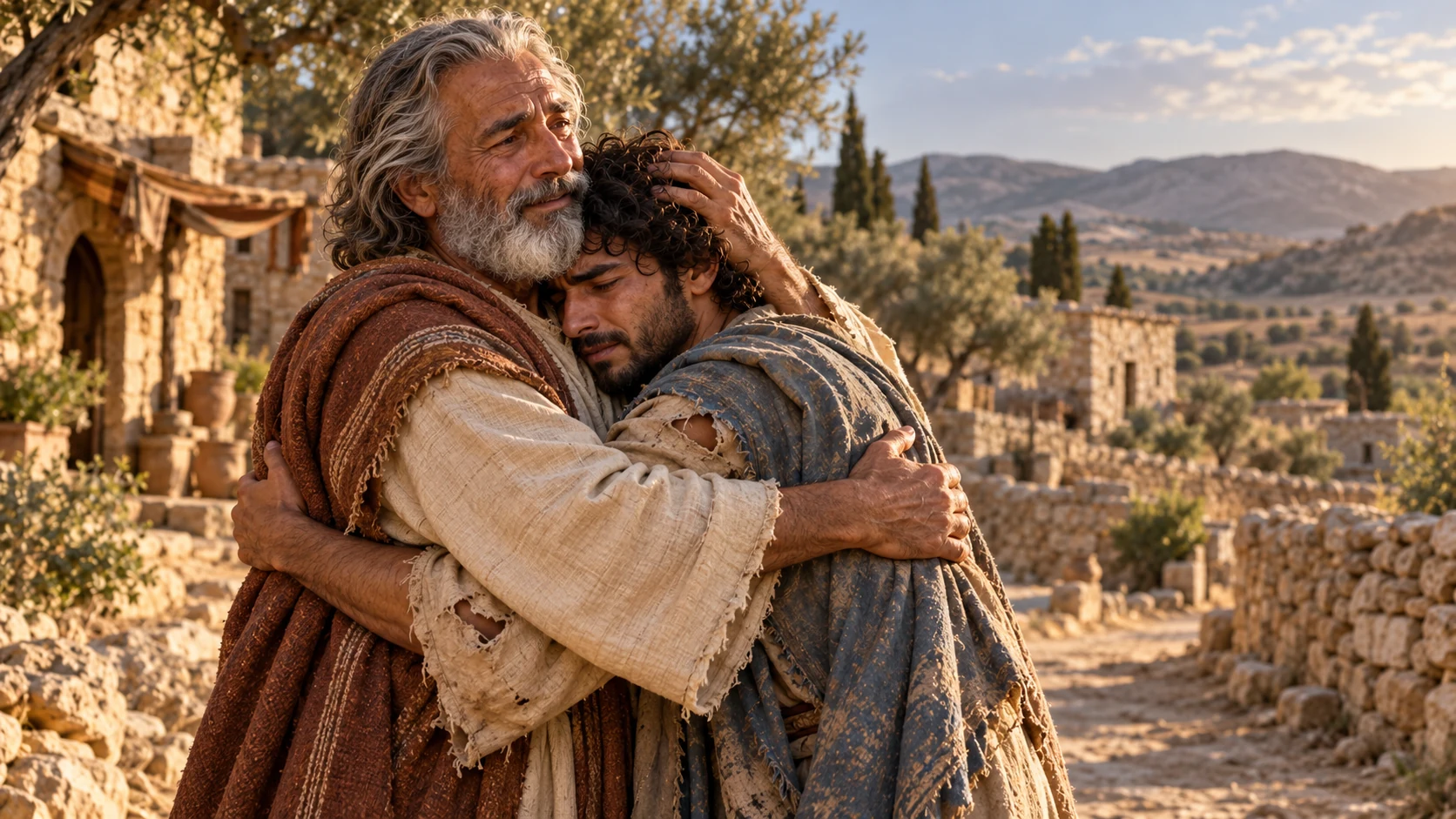
While the son is still far away, his father sees him, has compassion, runs to him, and embraces him.
The son confesses his sin. The father calls for a robe, a ring, sandals, and a celebration.
The father describes him this way:
Luke 15:24 (NKJV): “for this my son was dead and is alive again; he was lost and is found.”
The father does not describe the son’s rebellion as harmless. Something was seriously wrong: his son was lost.
Yet the son’s failure is not the end of the story. His return becomes an occasion for joy.
Jesus shows us the welcome of a compassionate father. Shame should lead us to acknowledge our sin, but it should not persuade us to stay away from God.
The Older Brother’s Problem
Read Luke 15:25–32.
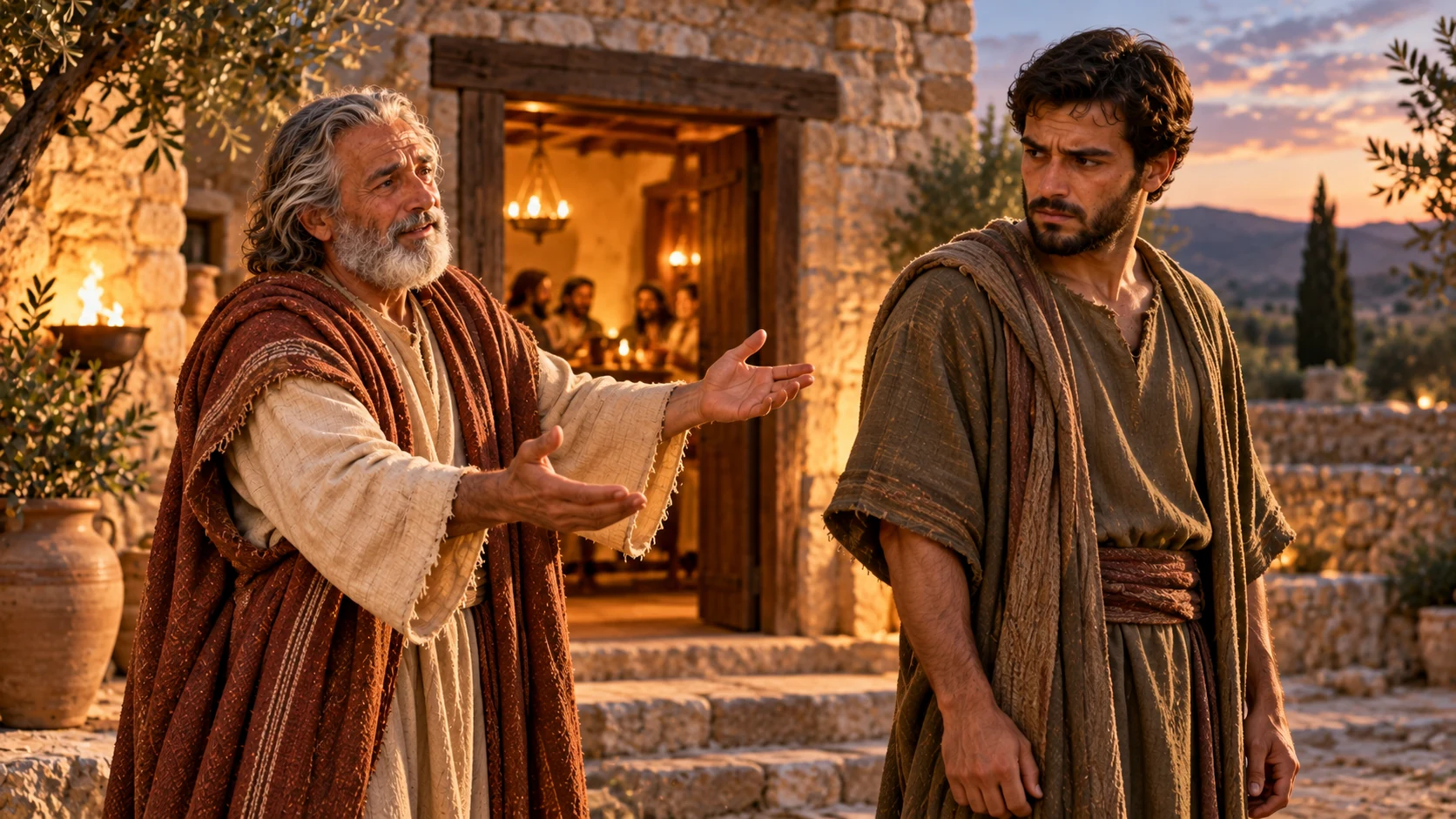
The older son hears the celebration and becomes angry. He refuses to enter.
When his father comes out to speak with him, he points to his years of service and complains about the welcome his brother has received.
He can recognize his brother’s wrongdoing, but he struggles to share his father’s joy over his return.
We should examine that attitude in ourselves. Do we welcome repentance, or do we believe someone should remain defined by past failures? Can we rejoice in mercy when we are not its most obvious recipient?
The father calls the younger son the older brother’s brother. The relationship the angry son distances himself from is the very relationship the father brings back into view.
Coming Home and Welcoming Others
This parable calls us to respond honestly.
If we have wandered, we need to stop defending the distance and turn back to God.
If we have become resentful, we need to examine whether our attitude toward repentant people reflects the Father’s compassion.
The story ends without telling us whether the older brother enters the celebration. That leaves us considering our own response.
Questions for Reflection
- What is the difference between regretting consequences and repenting of sin?
- What fears or attitudes can keep someone from returning to God?
- What does the father’s response reveal about receiving someone who repents?
- Where do you recognize the older brother’s attitude in yourself?
- What would turning toward God look like in your life today?
Images are AI-generated illustrations of Jesus’ parable.
← All written Bible lessons